What to Pack for Koh Lanta: A Practical Packing List
The short version: pack light, pack for heat and sudden rain, and skip anything too formal.

Summarize this page with AI
Pack light, breathable clothing, reef-safe sunscreen, a light rain layer and a dry bag, and you'll be set for almost everything Koh Lanta throws at you. The island is hot and humid year-round, so cotton or quick-dry fabrics beat anything heavy. Whatever the season, a sudden downpour is always possible, so a compact rain jacket or poncho earns its place even in the dry months. The rest of the list depends on when you go and what you plan to do: boat days, the national park trail or mostly beach.
For beach and boat days: a swimsuit or two, a wide-brimmed hat, sunglasses, and reef-safe (mineral, non-nanoparticle) sunscreen. Some tour boats and marine park areas actively discourage regular sunscreen because of coral impact. A dry bag or a simple waterproof phone pouch is genuinely useful on longtail boats and kayaking trips, where spray is normal. Sandals or flip-flops cover most of the island, but bring a pair of closed shoes or sturdy sandals if you plan to hike in Mu Ko Lanta National Park or explore Old Town's uneven boardwalks.
A couple of modest, lightweight items are worth packing for visiting temples or the national park visitor centre, where shoulders and knees covered is the norm. Add insect repellent (mosquitoes are present, especially at dusk), any personal medication in its original packaging, and a portable charger: power cuts are uncommon but not unheard of on the smaller beaches. Finally, don't overpack: Koh Lanta has plenty of shops, pharmacies and laundry services, so anything you forget is easy to buy or wash on arrival.
Small extras that earn their space: a reusable water bottle, a lightweight towel or sarong, a phone light or head torch for unlit roads at night, and photos of your passport and insurance. For health items and entry documents, follow official guidance from your government and Thai authorities rather than a packing list.
The list by season
Koh Lanta has two broad seasons: drier from roughly November to April, wetter under the southwest monsoon from roughly May to October. The base list is the same; what changes is how much weight you give to sun or to rain. Month-by-month detail is in our weather by month guide.
| Season | Priority | Add to the bag |
|---|---|---|
| Drier months (roughly November to April) | Sun and heat | Extra sunscreen, a rash vest or long-sleeve swim top for snorkelling, a wide hat, an insulated bottle, after-sun |
| Wetter months (roughly May to October) | Rain, mud and damp | Poncho or light rain jacket, dry bag for electronics, quick-dry clothes, shoes with grip, a spare phone pouch, anti-fungal powder |
| All year | Mosquitoes and boats | Repellent, a small first-aid kit, seasickness tablets if you are prone to it, a sarong, a head torch |
Seasons are approximate and shift from year to year; check the forecast the week before you leave.
What people most often forget
- A dry bag: spray on a longtail or speedboat soaks a daypack in minutes. A small one for phone and cash is enough.
- Shoes you can wet: reef shoes or sports sandals for rocky entries, boat ladders and the mangroves.
- A head torch: many beach roads and paths are unlit, and dogs and potholes are easier to spot with a light.
- A cover-up for temples and Old Town: shoulders and knees covered, light enough to carry all day.
- Cash in small notes: many stalls, songthaews and the national park gate take cash only. See currency and paying on the island.
- A universal adapter: check the plug type for Thailand against your devices before leaving.
- A copy of your documents: photos of your passport, insurance and bookings, stored offline.
Rain, mud and damp
A monsoon shower on Koh Lanta is usually short and heavy rather than an all-day drizzle, but it turns dirt tracks and viewpoint paths into mud quickly. Shoes with a real sole matter more than a heavy rain jacket: flip-flops slide on wet concrete ramps and clay paths. A light poncho that also covers your daypack is the most useful rain item on a scooter, where a jacket leaves your legs soaked anyway.
Damp is the other problem. Clothes dry slowly in humid months, so pack fewer items that dry fast rather than many cotton ones, and use the island's laundry services. Zip bags or a couple of dry bags keep electronics, documents and a dry set of clothes safe. Our page on Koh Lanta in the rainy season explains what the wet months are really like.
Mosquitoes
Mosquitoes are present all year and most active at dawn and dusk, near mangroves and after rain. Bring a repellent you tolerate well; local brands are sold in shops and pharmacies too. Light long trousers and a long-sleeve shirt for the evenings help as much as any spray. Many bungalows supply a net or screens, but a plug-in diffuser is cheap to buy on the island if yours doesn't.
Mosquito-borne diseases, including dengue, occur in Thailand. For current health advice and any recommended vaccines or prevention, follow your government's travel health service or a travel clinic before you go, not a packing list.
Beaches, rocks and boat days
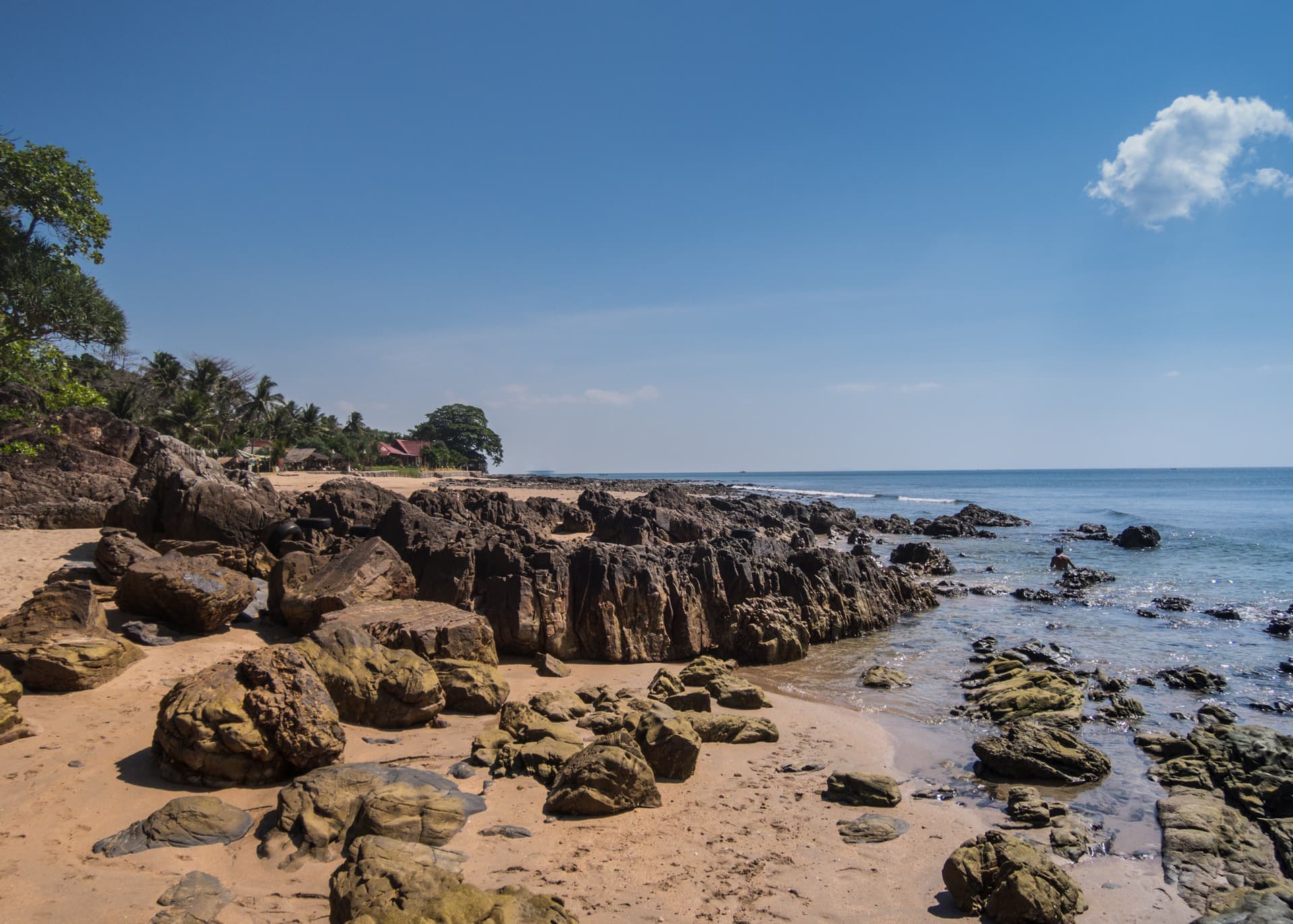
Most west-coast beaches are sand, but several have rocky sections, coral rubble at low tide or rocks at each end, especially in the south and around the smaller coves. Reef shoes protect your feet on these entries, on boat ladders and when wading at low tide. They are also useful in the mangroves.
For snorkelling trips, a rash vest or long-sleeve swim top cuts the amount of sunscreen you need and protects your back while you float face down. Tours usually list whether masks and life jackets are provided; if you have your own well-fitting mask, bring it. Budget cash for the marine park fee on Koh Rok and Koh Ha: 400 THB per foreign adult and 200 THB per child, not included in tour prices (checked 27 September 2026).
A small travel pharmacy
Pharmacies are easy to find around Saladan, Long Beach and Klong Dao, and they thin out towards the south. Pack a small kit so you are not hunting for one on a boat day or late at night:
- Your prescription medication, in original packaging, with enough for the whole trip and a copy of the prescription
- Plasters, antiseptic and a few sterile dressings for coral cuts and scooter scrapes
- Pain and fever relief you already know you tolerate
- Oral rehydration salts for heat or an upset stomach
- Seasickness tablets if you are prone to it before boat days
- After-sun or aloe, and an antihistamine cream for bites
Buy on the island or bring from home
| Easy to buy on Koh Lanta | Better to bring |
|---|---|
| Flip-flops, sarongs, hats, light clothes | Your prescription medication and a copy of the prescription |
| Standard sunscreen and repellent | Reef-safe mineral sunscreen (smaller choice on the island) |
| Toiletries, snacks, drinking water | A mask that fits you, if you snorkel a lot |
| Laundry service | Good walking shoes or reef shoes in your size |
| Ponchos in the rainy months | Contact lenses and solution, spare glasses |
| Cheap dry bags and phone pouches | Adapters for unusual plugs, spare camera batteries |
Choice is widest around Saladan and Long Beach and narrower in the south. Observation at the date of this review, 27 September 2026; stock and shops change.
The rainy-season kit
- Poncho large enough to cover you and a daypack on a scooter
- Two dry bags: one for electronics and documents, one for a dry change of clothes
- Quick-dry clothing and fewer items overall
- Sandals or shoes with grip for wet concrete and muddy paths
- Anti-fungal powder and a spare pair of socks if you wear closed shoes
- A power bank: storms can cut power for a while
- A flexible plan: keep a spare day for a boat trip, since rough seas cancel boats before rain does
Frequently asked questions
It's a good idea. Short, sudden showers can happen even outside the official rainy season, so a compact rain jacket or poncho is cheap insurance and takes almost no space in a bag.
See dry season vs rainy seasonIt's strongly recommended, and some boat operators and marine park areas ask visitors to use it specifically because standard sunscreens contain chemicals linked to coral damage. Bring it from home if you can, since selection on the island is more limited.
Bring or plan to withdraw some Thai Baht. Cards are accepted in bigger hotels and restaurants, but many small places are cash-only.
Currency and paying on the islandNot heavy boots. Sturdy sandals or light trainers with grip are enough for the national park trail and viewpoints; they matter more in the wet months, when paths get muddy.
A poncho that covers a daypack, two dry bags, quick-dry clothes, shoes with grip, repellent and a power bank, plus a spare day in your plans for boat trips.
Koh Lanta in the rainy seasonLast verified 27 September 2026
Sources and further reading
Plan your days
Book the experiences that make the trip
Compare the best-rated Koh Lanta tours, check live prices and availability, and book in a few clicks.